
#SharedPride 🌈 Day 12: Allyship
Daily Queer resources & ideas for our classes all June long!
The majority of teachers I talk to about inclusive practices in ELT don’t (yet) identify themselves within the LGBTQ+ community. Some obviously do and I’m so happy to see you, but most are very interested in supporting. You’re allies and even we’re allies to each other (or should be) and sometimes we just want a guide on being a good one because questions.
🏳️⚧️ … comes with a guidebook now.
I’ve found one. Hurrah, us! 🎉 It’s published as a part of the Straight for Equality program by PFLAG, “the [USA’s] largest organization dedicated to supporting, educating, and advocating for LGBTQ+ people and those who love them.”
PFLAG has popped in my field of vision here and there over the years though it was never my go-to source of info about queerness. I think probably Queer As Folk was likely where I noticed them for the first time because Sharon Gless’s character, Debbie, was a member and walked in the Pride parade with them and was surprised by her son’s decision to join her finally.
Thanks to that usually pesky algorithm, their work comes up regularly enough through their socials (along with Canada’s Egale amongst others). They’re consistent enough with a long-standing body of work that I’d say they can be trusted, with still a critical eye.
Recently I came across this Guide to Being An Ally to Trans and Nonbinary People, which I’ve read from start to finish a few times. THIS is the actual cover:
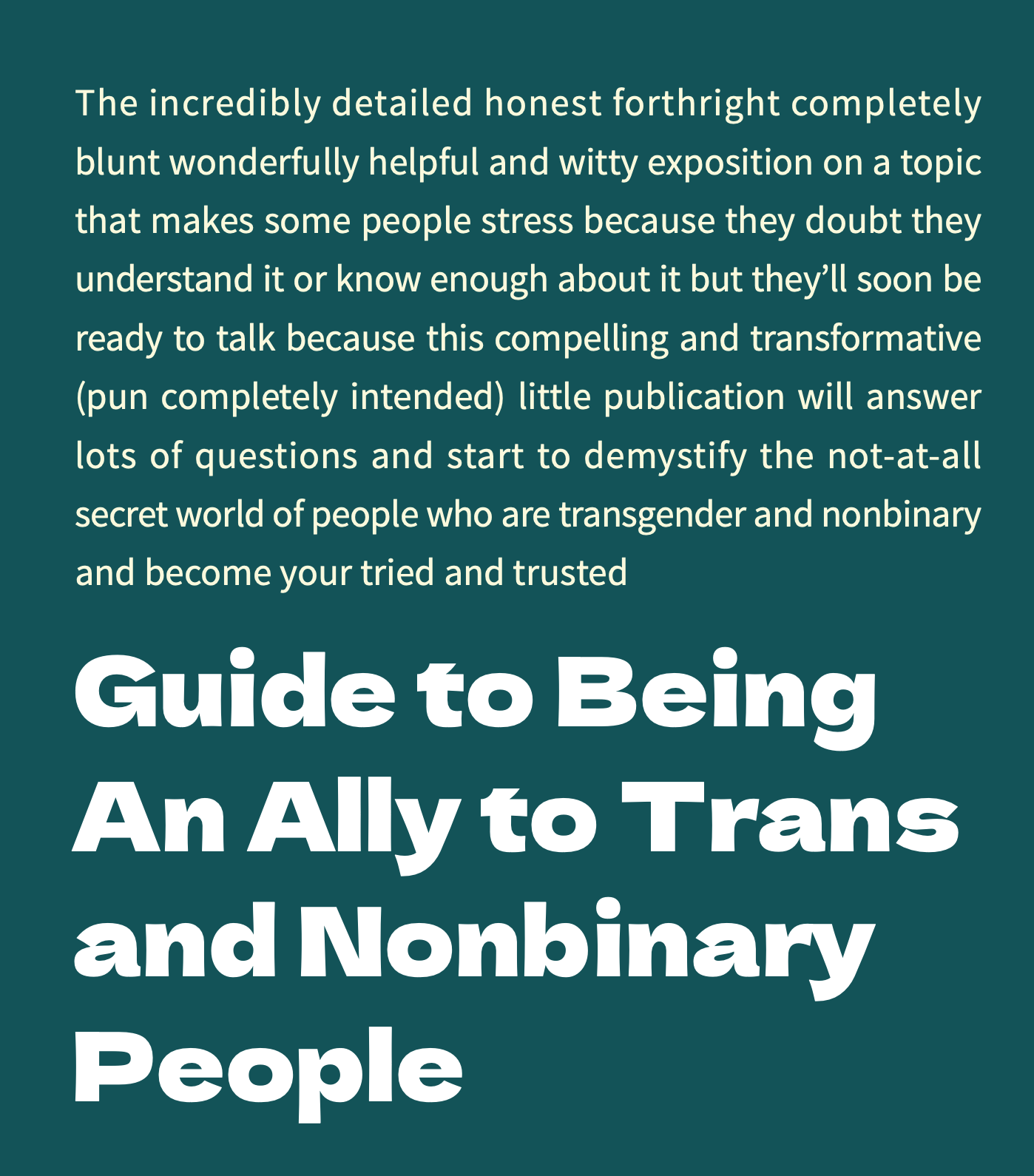
They’re truthful. It’s accessible. It’s written by Queer folx for allies. It’s logical, helpful, clear… and wittingly conversational. More on that later. 💀
This guide includes sections on foundational terminology, characteristics of allies, commonly perceived barriers to allyship, and solutions/suggestions to these barriers. They’re frank yet supportive:
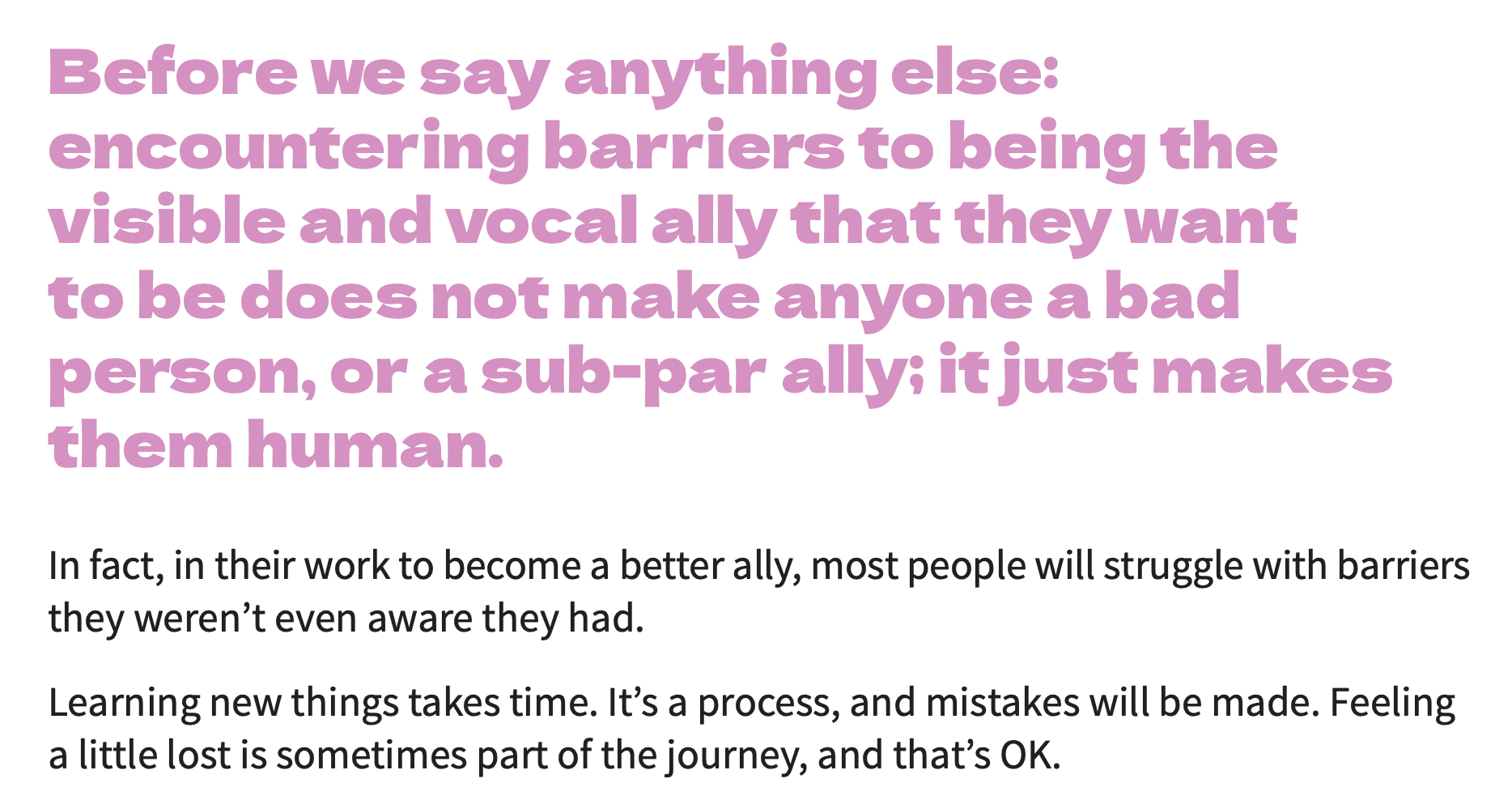
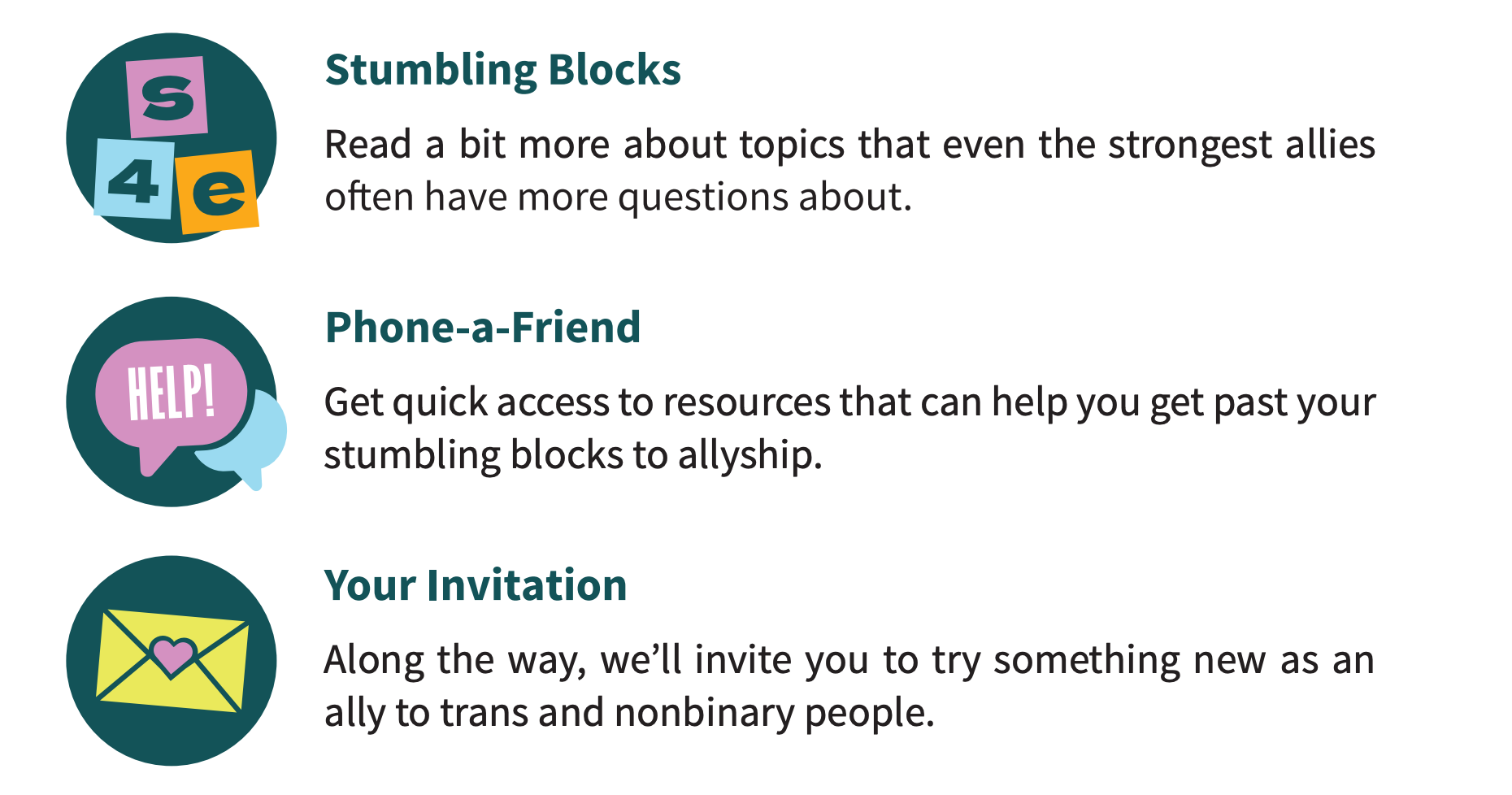
They cleverly draw from well-known pop culture concepts to reassure readers of things they’ll find throughout the guide, which makes the guide predictable and reassuring, like:
What I particularly appreciate is real people examples to illustrate points, like self-reported identity descriptions that are plotted on identity graphs about terms explained in earlier chapters:
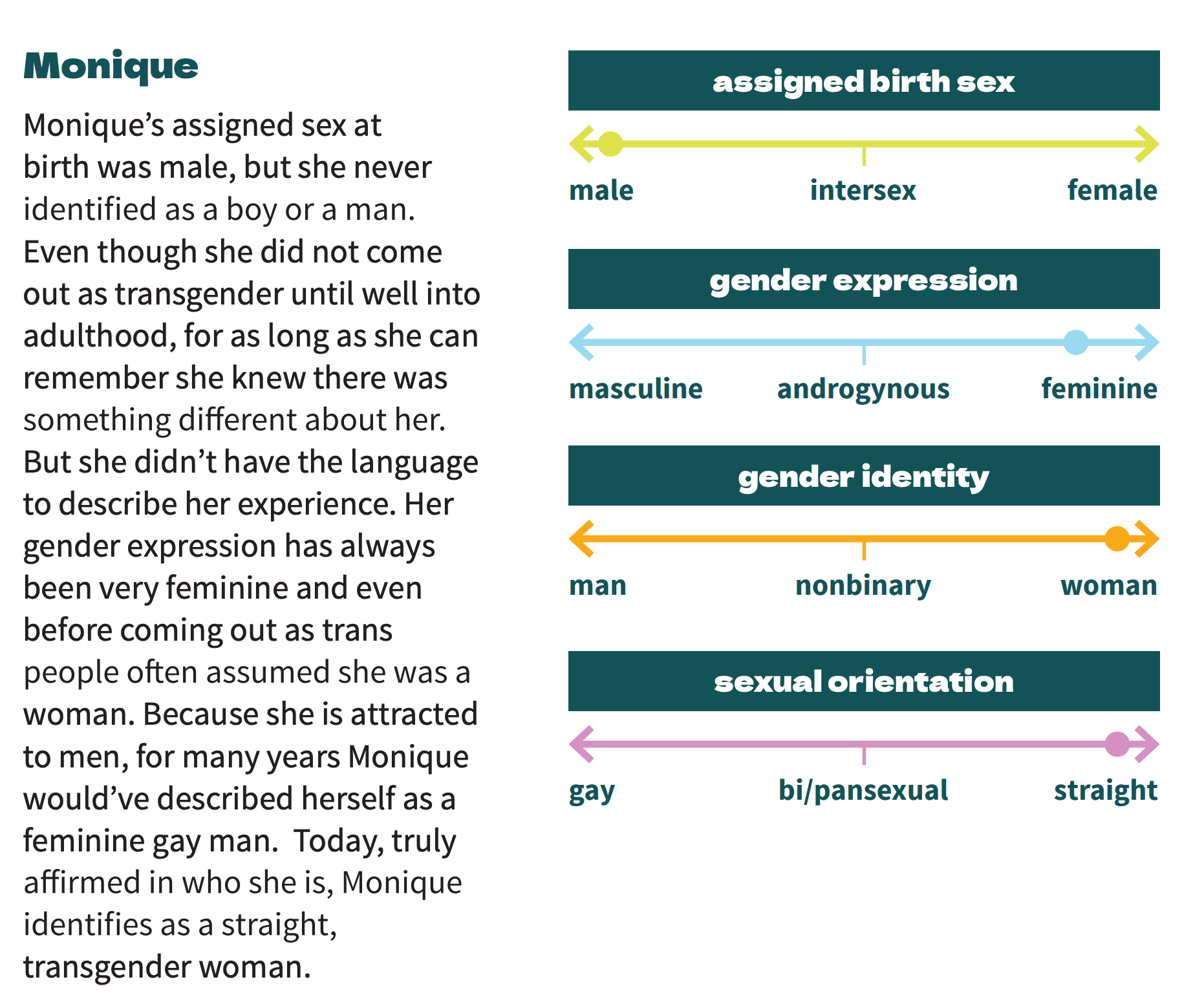
Or this one of several describing how allies in different people’s lives made a positive impact:
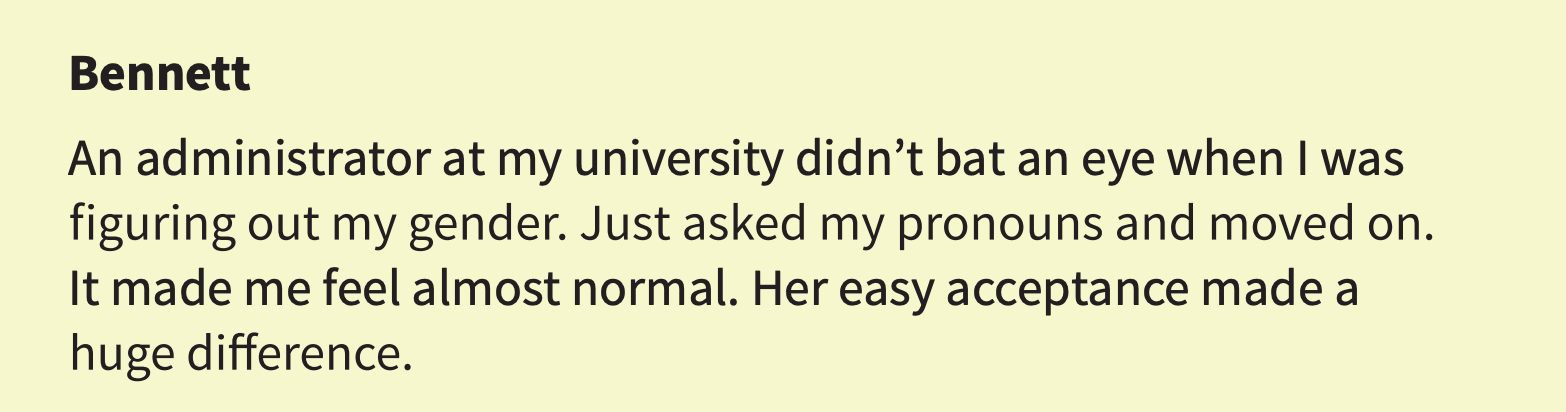
This made me have all the feels, being an academic director myself. 🥹 🥹 🥹
And finally, did I mention it was witty? Well, it’s Queer after all.
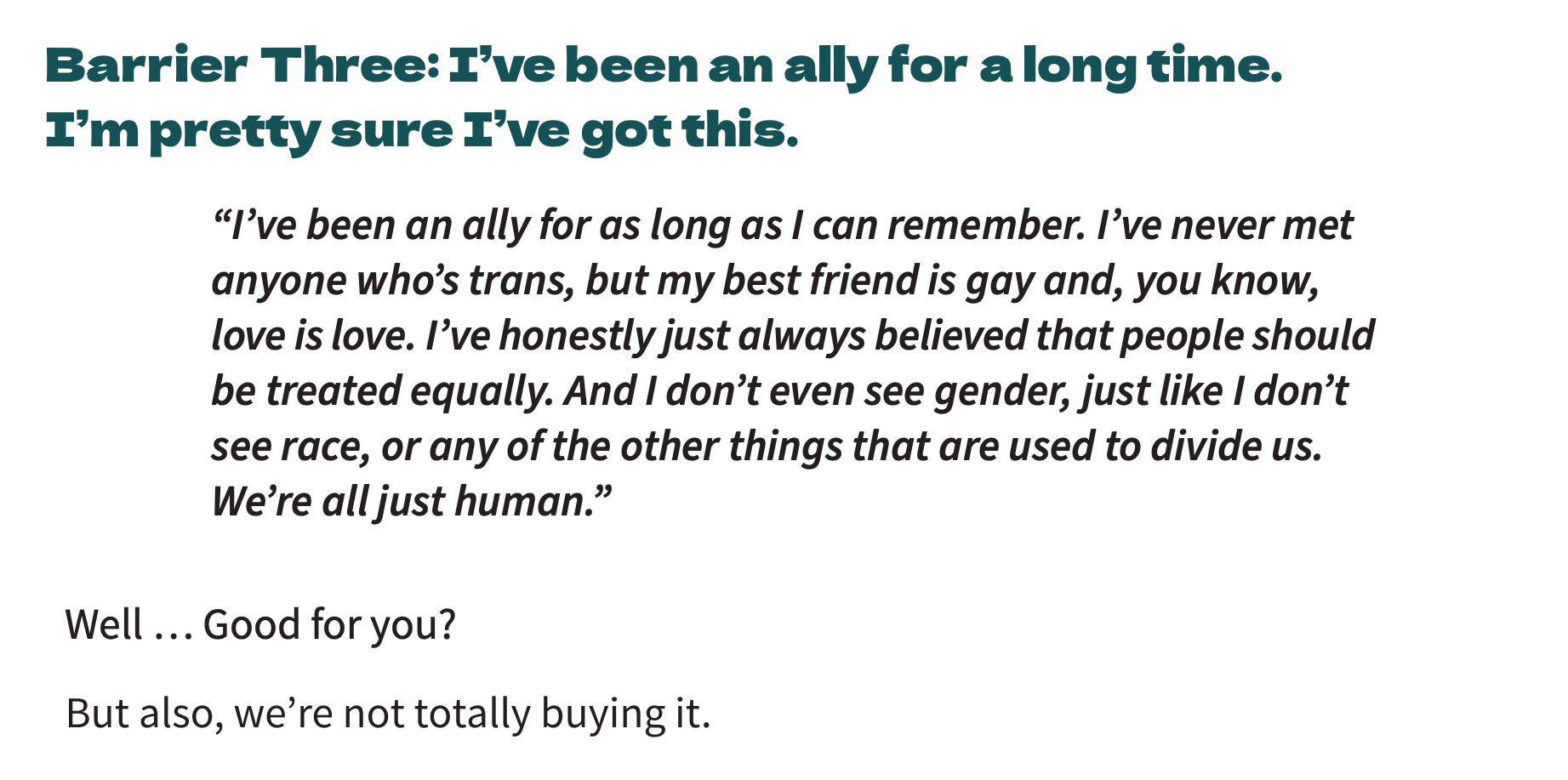
OK, so I think I sort of love these writers. Anyways, allies: this one is for you!
How can you use this with classes?
It’s a text. We all need texts to work with language in class, right? Bits and pieces even.
There are some great real voices and their perspectives and stories. Bring them into the conversations in class. Talk about allyship in this context and all sorts of others.
Have learners write out a how-to guide about being a good ally to themselves, their family, or another set of individuals. Use this text as the model.
Further reading
For broader queer allyship, I recommend this edited volume by my friend Ethan Trinh and their co-editors:

I wrote: Allyship has complex and personal definitions depending on perspective. What queer allyship means in a reality where societal and political beliefs widely vary can seem messy, which may paralyze self-identifying allies into inaction. The authors and editors of this volume, however, embrace this messiness as an infinite space to explore ways forward. Rather than isolate allyship from queerness--where allies navigate challenging barriers to create change alone--this volume highlights how it unites people in and around our queer TESOL community to ‘co-create and co-construct a space of togetherness’. Each chapter embodies a ‘becoming one together,’ with heartwarming, inspiring, and reflective moments between teachers, learners, researchers, and language learners through their experiences of queer pedagogy in classrooms across the globe and this demonstrates what makes queer allyship both unifying and necessary in our field.
UPDATE 2026: Ethan is our main guest on Werkbook podcast, Season 1 Episode 6! Please check it out on all your platforms or here on Substack!
#HowToInclusive 🏳️🌈 #QueeringELT 🏳️🌈 #LGBTQinELT 🏳️🌈 #SharedPride